
Strategic Roadmap for the EDI Framework for NJ Libraries Project
January 2026 Status Update
[ Also available in PDF  ]
]
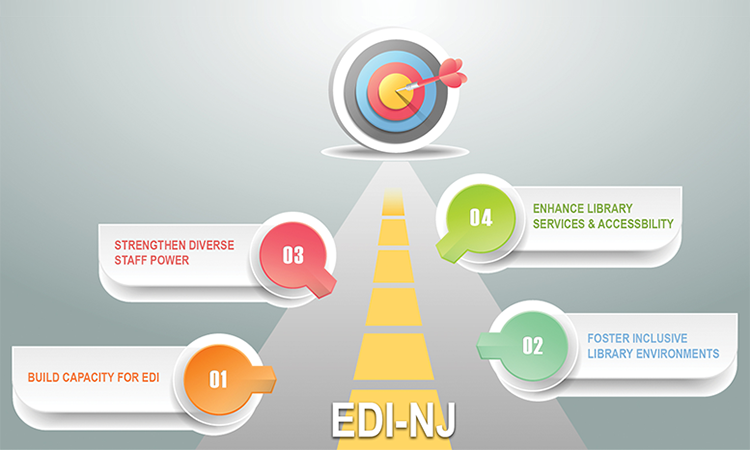
The Strategic Roadmap for the EDI Framework for NJ Libraries is a statewide initiative designed to advance equity, diversity, inclusion, and accessibility across New Jersey libraries. Guided by four core goals, the project focuses on building staff capacity, fostering inclusive library environments, strengthening diverse staff power, and enhancing equitable and accessible services. As we move into the new year, our commitment, enthusiasm, and determination to advance our project goals remain sturdy and steady. This update highlights our recent developments and strategic shifts and invites you to engage with ongoing opportunities.
Goal 1: Build Capacity for EDI
Increasing the knowledge, skills, and abilities of library staff across New Jersey in understanding and implementing EDI principles has remained a central focus of this phase of the project. Between March and April 2025, a draft Institutional EDI Assessment and accompanying Scoring Guide were finalized and shared with a broad group of stakeholders for feedback. This intentional review process was designed to ensure that the tool was relevant, practical, and responsive to the diverse operational realities of New Jersey libraries. Following revisions informed by stakeholder input, the assessment was piloted with a small group of libraries, and additional refinements were made before broader release.
In May 2025, the EDI-NJ Institutional Assessment Tool officially launched alongside a companion Learning Module Series. Together, these resources were designed to support libraries both in completing the assessment and in building shared language, strengthening EDI understanding, and translating reflection into action. The launch was accompanied by outreach and visibility efforts, including a well-received presentation at the NJLA Annual Conference, where Ozy Aloziem, the EDI Lead, shared an overview of the Strategic Roadmap, lessons learned, and a walkthrough of the assessment. A virtual information session held in June provided additional orientation and space for questions from libraries across the state.
While promotion of the tool continued through the summer months, early completion rates were lower than anticipated. Rather than interpreting this as a lack of interest, the project team recognized the need for deeper, more structured engagement and shifted strategy accordingly. This led to the creation of a pilot program designed to build capacity through direct consultation, collaboration, and sustained guidance.
Goal 2: Foster Inclusive Library Environments
Progress towards this goal has been made through the design and implementation of the Institutional EDI Assessment and its supporting resources. The assessment itself serves as a structured mechanism for libraries to examine policies, practices, workplace culture, and community engagement through an equity-centered lens. The Learning Module Series and Debrief Guide were intentionally developed to support reflective practice, shared understanding among staff, and facilitated dialogue that can surface patterns, gaps, and opportunities for change.
In response to the need for deeper engagement, the EDI Institutional Assessment Pilot Project was developed and announced in November. The pilot is designed to provide structured support for libraries that are ready to begin or deepen their EDI work, while also continuing beta testing of the assessment to ensure its accessibility and usefulness across library types, sizes, and community contexts. The following eight libraries were selected to participate, representing a range of institutional settings and stages in their equity journeys:
- Burlington County Library System
- Hunterdon County Library System
- Jennings Library at Caldwell University
- John P. Faber School Library
- Moorestown Library
- New Brunswick Free Public Library
- Piscataway Public Library
- University Library at Rider University
Participating libraries have been onboarded and are currently completing the assessment with designated project teams. All pilot libraries will participate in a January workshop before moving into facilitated debriefing and action planning.
Goal 3: Strengthen Diverse Staff Power in Library Workspaces
Strengthening diverse staff power across New Jersey libraries has been supported through renewed attention to shared resources, professional development pathways, and statewide collaboration. During the fall, two subcommittees were re-ignited to advance this work. One committee is focused on developing DEIA toolkits and an EDI Resource Hub by identifying, auditing, and organizing non-training related resources relevant to New Jersey libraries. The second committee is focused on identifying and reviewing EDI-related training opportunities, with the goal of curating high-quality offerings that can support staff growth and leadership development.
Progress within both subcommittees has been steady, though constrained by limited membership and volunteer capacity. In response, the project team has taken several creative steps to sustain momentum while remaining realistic about scope. A library school student was brought on to support research, coordination, and resource compilation, which has increased capacity. In addition, a public form was created to solicit recommendations for EDI resources and trainings from the broader library community, allowing the project to benefit from collective knowledge while expanding perspective beyond the subcommittees themselves.
Goal 4: Enhance Library Services and Accessibility
Improving the accessibility and inclusivity of library services, particularly for underserved and marginalized communities, is embedded throughout the Institutional Assessment’s seven core operational areas. These areas prompt libraries to examine how services are designed, delivered, and evaluated, and how community voices are engaged in shaping priorities. Data gathered through the pilot project will provide insight into common barriers, capacity gaps, and promising practices across different library contexts.
The pilot project is also being intentionally designed as a case study that models collaborative, reflective, and action-oriented approaches to advancing organizational equity. Lessons learned through this process will inform recommendations for libraries statewide and contribute to a framework that can be adapted in other states.
Additional Achievements
Throughout this period, the project has continued to build statewide visibility and legitimacy. Engagement at the NJLA Conference and subsequent information sessions increased awareness of the Strategic Roadmap and positioned the assessment as an important, credible, practical tool. As part of this growth, the project advanced through the initial review stage of the IMLS Laura Bush 21st Century Librarian Grant Program and was invited to submit a full proposal for consideration. The proposal received strong initial support but was ultimately not funded due to the project’s focus alongside broader U.S. administrative shifts away from equity, diversity & inclusion work and subsequent funding impacts. At the national level, the project has gained additional recognition through acceptance of a proposal for the June 2026 ALA Conference, which will highlight New Jersey’s approach to coordinated, statewide EDI strategy and share lessons learned with a broader audience.
Equally important has been the project's ability to adapt to real conditions. The strategic shift from broad promotion of the Institutional assessment to a supported pilot model reflects a commitment to being responsive, integrating feedback, building relationships, and ensuring accountability. It’s important to note that the project continues to receive meaningful support from its partners, including direct financial contributions, even as organizations navigate increasingly precarious funding environments. Partners include the New Jersey State Library (NJSL), the New Jersey Association of School Libraries (NJASL), the New Jersey Association of Library Assistants (NJALA), the Virtual Academic Library Environment of New Jersey (VALE), the Bergen County Cooperative Library System (BCCLS), the Main Library Alliance, PALS Plus, and libraries across New Jersey. Continued funding from the New Jersey Library Association (NJLA) and LibraryLinkNJ enables us to move forward with our planned activities.
Looking Ahead
Between January and June 2026, the project will continue moving through the EDI Institutional Assessment Pilot Project with the goal that each participating library develops a concrete EDI action plan by June 2026. Workshops will support assessment debriefing and action planning, ensuring that reflection leads to implementation. The development of the Individual EDI Assessment Tool will also move forward, informed by feedback from pilot libraries, subcommittee resource scans, and continued input from project members as capacity grows. Work on the EDI Resource Hub and NJ-specific toolkits will continue in parallel, alongside ongoing efforts to recruit additional subcommittee members to strengthen sustainability and perspective.